

Hey there! As a supplier of Leno Mesh Bags, I'm super excited to walk you through the production process of these nifty bags. Leno Mesh Bags are used in a wide range of industries, from agriculture to construction, and they're known for their durability and flexibility. So, let's dive right in!
Step 1: Raw Material Selection
The first step in making Leno Mesh Bags is choosing the right raw materials. Most of the time, we use polypropylene (PP) or polyethylene (PE) because they're strong, lightweight, and resistant to moisture. These materials come in the form of small pellets, which are easy to handle and store.
PP is a popular choice for making PP Plain Leno Bag because it's rigid and has good tensile strength. It can withstand a lot of wear and tear, making it ideal for packaging heavy items. On the other hand, PE is more flexible and has better elongation properties. It's often used for Firewood Leno Bag and other applications where a bit of stretch is needed.
Step 2: Extrusion
Once we've selected the raw materials, it's time for the extrusion process. This is where the plastic pellets are melted down and turned into thin strands. We feed the pellets into an extruder, which is basically a big machine with a long screw inside. As the screw rotates, it heats up the pellets and pushes them through a die at the end of the machine.
The die is a specially designed tool that gives the plastic strands their shape. For Leno Mesh Bags, the die has small holes arranged in a specific pattern. As the molten plastic is forced through these holes, it forms thin, continuous strands. These strands are then cooled down quickly by passing them through a water bath, which helps to solidify them.
Step 3: Weaving
After the extrusion process, the plastic strands are ready to be woven into a mesh fabric. We use a special weaving machine called a leno loom for this step. The leno loom works by interlacing the strands in a unique way to create a strong, open-mesh structure.
The weaving process is a bit like making a basket, but on a much larger scale. The plastic strands are fed into the loom, and the machine moves them back and forth, over and under each other, to form the mesh pattern. The leno weave is what gives Leno Mesh Bags their distinctive look and makes them so strong and durable.
Step 4: Cutting and Sewing
Once the mesh fabric has been woven, it's time to cut it into the right size and shape for the bags. We use a cutting machine to trim the fabric to the desired dimensions. This machine can cut through the mesh fabric quickly and accurately, ensuring that each bag is the same size.

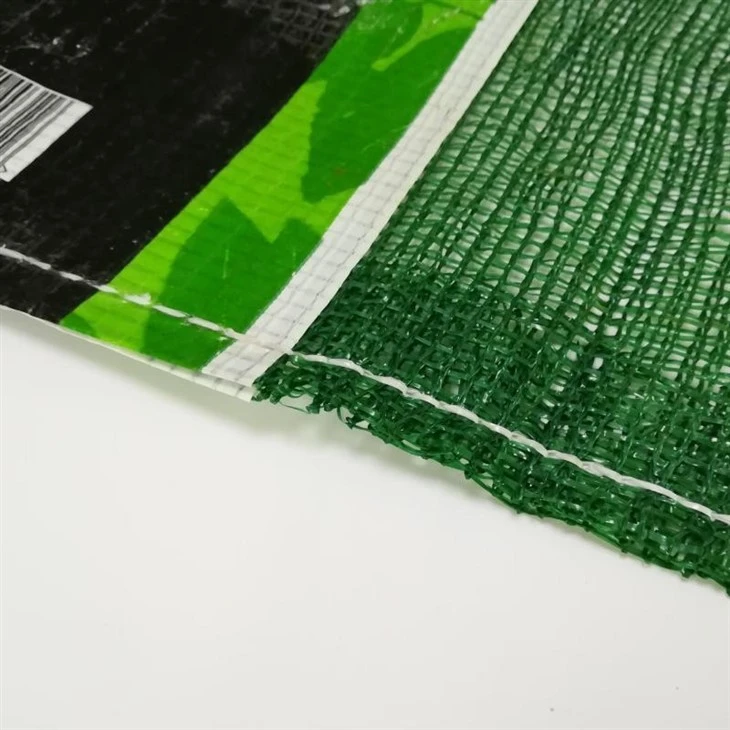
After the fabric has been cut, we sew the edges together to form the bags. We use a high-quality sewing machine and strong thread to make sure the seams are secure. Depending on the type of bag, we may also add additional features, such as handles or drawstrings, at this stage.
Step 5: Printing and Finishing
If the customer wants the bags to have a logo or other printed design, we can do that at this step. We use a printing machine to apply the design to the bags. The printing process is similar to the one used for T-shirts or other textiles. We use special inks that are designed to adhere to the plastic mesh fabric and withstand the elements.
Once the bags have been printed, we give them a final inspection to make sure they meet our quality standards. We check for any defects, such as holes or loose threads, and make sure the bags are the right size and shape. If everything looks good, the bags are ready to be packed and shipped to the customer.
Step 6: Quality Control
Throughout the production process, we have a strict quality control system in place to ensure that every Leno Mesh Bag we make meets our high standards. We test the raw materials to make sure they're of the right quality, and we inspect the finished bags to make sure they're free of defects.
We also conduct regular checks on the production equipment to make sure it's working properly. This helps to prevent any problems from occurring during the production process and ensures that we can produce high-quality bags consistently.
Step 7: Packaging and Shipping
Once the bags have passed the quality control inspection, they're ready to be packaged and shipped to the customer. We use high-quality packaging materials to protect the bags during transit. We pack the bags in boxes or pallets, depending on the size and quantity of the order.
We work with reliable shipping companies to ensure that the bags are delivered to the customer on time and in good condition. We also provide tracking information so that the customer can keep an eye on the progress of their order.
Conclusion
So, there you have it! That's the production process of Leno Mesh Bags in a nutshell. As you can see, it's a complex process that involves several steps, but we take great care to ensure that every bag we make is of the highest quality.
If you're in the market for Leno Mesh Bags, whether it's PP Plain Leno Bag, Firewood Leno Bag, or PE Raschel Bag Rolls, we'd love to hear from you. We offer a wide range of sizes, colors, and designs to meet your specific needs. Contact us today to discuss your requirements and get a quote.
References
- Plastic Extrusion Technology Handbook
- Textile Weaving: Principles and Applications


